Minimalistic One Line Rooster: A Designer's Review
As an embroidery designer who spends countless hours digitizing and testing files for commercial clients, I approach every new machine embroidery design with a critical eye. It is not enough for a file to look pretty on a screen; it must perform flawlessly on a cap, withstand the industrial wash cycles of a staff uniform, and elevate a brand's identity. Today, I am reviewing the Minimalistic One Line Rooster, a continuous single-line design categorized under Farm Animals. This piece promises simplicity, but in the world of commercial embroidery, simplicity is often the hardest thing to execute perfectly.
First Impressions and Visual Personality
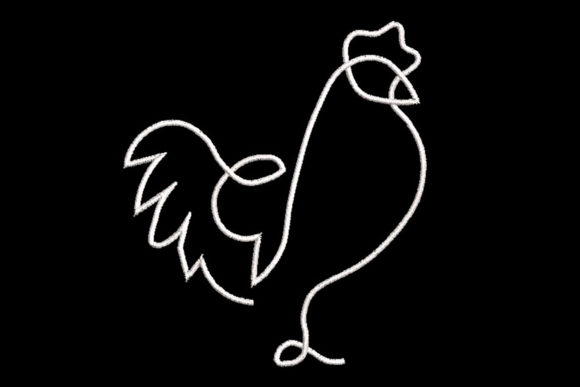
Upon loading the digital embroidery file into my editing software, the first thing that strikes me is the confidence of the line work. There are no fill stitches, no complex satin columns, and no shading tricks. It is purely a continuous path. This gives the Minimalistic One Line Rooster a distinctively modern and handmade aesthetic. It feels less like a corporate logo and more like an artisanal mark, which is exactly what many boutique owners and Etsy sellers are chasing right now.
The design exudes a rustic yet elegant vibe. It avoids the cartoonish trap that many animal motifs fall into, opting instead for a fluid, artistic interpretation of the rooster. For a small business owner in the bakery, florist, or pet industry sectors, this visual personality suggests creativity and approachability. It signals to the customer that the brand values craftsmanship. However, because it relies entirely on a single thread path, the success of the final look depends heavily on your choice of thread colors and fabric contrast.
Real-World Applications for Small Business Merch
The true test of any design is its versatility across different products. The Minimalistic One Line Rooster shines when applied to small business merch that requires a subtle touch. Here is how I envision this design performing in real scenarios:
- Embroidered Patches: This is perhaps the strongest use case. A 4″ x 4″ hoop size allows for a generous patch that can be sewn onto denim jackets, canvas tote bags, or apron bibs. The single-line nature means the patch remains flexible and soft, avoiding the "cardboard" feel of heavy fill stitches.
- Staff Uniforms and Aprons: For a farm-to-table café or a gardening center, this design works beautifully as a chest logo accent on an apron embroidery project. It is professional without being overpowering, allowing the staff's personality to shine through while maintaining brand consistency.
- Cap Embroidery: Placing this on the side panel of a baseball cap or the front of a dad hat creates a trendy, understated look. The continuous line flows well over the curved surface of a cap, provided the digitizing accounts for the push and pull of the fabric.
- Tote Bag Design: Canvas totes are a staple for markets and events. This rooster serves as an excellent central motif or a corner detail, adding value to a simple bag and turning it into a walking advertisement for the brand.
Technical Considerations and Potential Pitfalls
While the Minimalistic One Line Rooster is described as suitable for beginners, experienced decorators know that "simple" designs often reveal fabric flaws more easily than complex ones. Because there is no dense underlay or fill to hide imperfections, the fabric texture becomes a major player in the final outcome.
If you are stitching this on a textured linen or a coarse canvas, the single line might get lost or appear jagged. Conversely, on smooth performance fabrics or high-thread-count polos, the line will appear crisp and premium. You must also be wary of stitch density. Even though it is one color, if the line doubles back on itself too frequently in the digitized version, it can create bulk. Always inspect the stitch sequence before running a production batch.
Furthermore, consider the scale. While the file fits a 4″ x 4″ hoop, shrinking this design down for a tiny pocket logo on a child's shirt might cause the details of the rooster's comb or tail to merge. In cap embroidery or small patches, ensure the line weight remains visible. If the line is too thin, it may break during wear or washing. Always request a physical sample before committing to a large order of custom apparel.
Impact on Brand Identity and Customer Trust
In today's market, consumers are drawn to brands that feel authentic. Using a design like the Minimalistic One Line Rooster helps build a cohesive brand identity that feels curated rather than generic. When a customer receives a product with this embroidered mark, whether it is a quilt block or a branded label, it communicates attention to detail. It elevates the perceived value of the finished product.
For handmade product creators, this design acts as a seal of quality. It distinguishes your items from mass-produced goods that typically use screen printing or heat transfers. The tactile nature of embroidery builds trust; it shows you invested in durable, high-quality branding. This visual consistency across your design assets—from packaging accents to employee uniforms—reinforces recognition and fosters buyer engagement.
Practical Designer Notes for Production
Before you integrate the Minimalistic One Line Rooster into your client projects or personal inventory, follow these practical steps to ensure success:
- Test in Black and White First: Strip away the color variables. Stitch the design in black thread on white fabric and vice versa. This reveals the true clarity of the line work and highlights any spacing issues.
- Verify Hoop Size Compatibility: The description notes a 4″ x 4″ hoop size. Ensure your machine and hoop setup match this requirement, especially if you plan to place the design on curved items like caps where smaller hoops are sometimes necessary.
- Select the Right Stabilizer: Even for simple designs, using the proper stabilizer is crucial. For stretchy fabrics like t-shirts, use a cut-away stabilizer to prevent distortion. For woven fabrics like twill or denim, a tear-away may suffice, but always test first.
- Create a Printable Mockup: Before stitching, create a printable mockup to show your client how the rooster will look on their specific garment. This manages expectations and secures approval.
- Check Commercial Licensing: Since this review focuses on business use, confirm the license terms of the embroidery file. Ensure you have the rights to use it for commercial purposes, especially if you are selling the finished patched items or offering embroidery services.
- Review Thread Contrast: Because the design is one color, the contrast between the thread and the garment is everything. Avoid low-contrast combinations unless a subtle, tone-on-tone effect is specifically desired for a premium look.
The Minimalistic One Line Rooster is a versatile asset for the modern embroiderer. It bridges the gap between rustic charm and modern minimalism, making it an ideal choice for farms, cafes, boutiques, and creative studios. By respecting its technical limitations and leveraging its aesthetic strengths, you can create branded merchandise that stands out in a crowded marketplace. Remember, the devil is in the details, so always test, verify, and stitch with intention.