Buck Deer Lineart Review for Small Business Merch
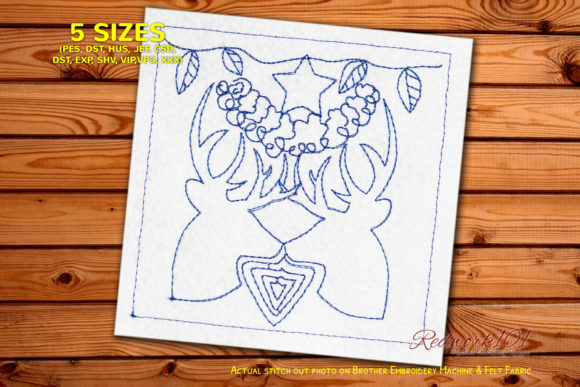
As an embroidery designer who has spent years digitizing and reviewing files for commercial use, I approach every new machine embroidery design with a critical eye. It is not just about whether the image looks good on a screen; it is about how that digital embroidery file translates into a tangible finished product that builds a brand. Today, I am reviewing Buck Deer Lineart, a design featuring two buck deer heads, specifically evaluating its potential for small business merchandise, branded patches, and professional apparel.
The first impression of Buck Deer Lineart is one of rustic elegance and natural strength. Falling under the Wild Animals category, this design carries a specific visual personality. It feels outdoorsy yet refined, making it an excellent candidate for brands that want to project authenticity, durability, and a connection to nature. Unlike overly cartoonish animal motifs, this lineart style suggests a more mature aesthetic, suitable for boutique coffee shops, outdoor gear retailers, florists, or artisanal bakeries looking to elevate their brand identity.
Real-World Applications for Custom Apparel and Patches
When considering where to deploy Buck Deer Lineart, the versatility is immediately apparent. For a local café or bakery, this design works exceptionally well as an apron embroidery accent. Placed on the chest or near the pocket, the two deer heads create a balanced focal point that feels welcoming without being cluttered. The lineart style ensures that the design remains legible even when stitched in a single color against a canvas or denim apron.
For retail boutiques and creative studios, this design shines as an embroidered patch. Patches are a massive trend in small business merch because they offer a low-risk way for customers to buy into a brand. Buck Deer Lineart can be digitized as a merrow-edge patch or a detailed woven label. Because the description notes that the outer box stitch is optional, you have the flexibility to create a die-cut shape that follows the contour of the deer heads, which often looks more premium than a standard square or circle backing.
Another strong use case is cap embroidery. The front panel of a baseball cap or beanie is prime real estate for branding. The symmetrical nature of the two buck heads makes this design ideal for center-front placement. However, caps present a curved surface challenge. A professional review dictates that we must ensure the stitch density is not too high, or the fabric will pucker, distorting the deer features. If the digitizing is done correctly, this becomes a staple item for staff uniforms or customer gifts.
Tote bags are another perfect vessel for this artwork. A heavy cotton tote with Buck Deer Lineart stitched in contrasting thread colors serves as both a functional item and a walking advertisement. Whether used for grocery runs or carrying craft supplies, the durable nature of embroidery ensures the logo survives frequent washing better than printed ink.
Technical Considerations for Production Quality
While the aesthetic appeal of Buck Deer Lineart is strong, successful implementation requires attention to technical details. The product description mentions that the color of the outer box is often different and can be skipped. This is a crucial detail for production efficiency. Skipping unnecessary color stops reduces machine runtime and thread consumption, which directly impacts your profit margins on commercial embroidery projects. Always verify with your digitizer if the file allows for easy removal of these optional elements without leaving gaps in the underlay.
Fabric texture plays a significant role in how lineart performs. On smooth fabrics like twill or broadcloth, the fine lines of the deer heads will appear crisp and defined. However, on textured fabrics like fleece, corduroy, or rough canvas, fine details can get lost. Before committing to a large run of custom apparel, you must test the design on the actual fabric you intend to use. If the material is highly textured, you may need to simplify the inner detailing of the deer heads or increase the stitch width slightly to maintain visibility.
Stabilizer selection is non-negotiable. For items that will undergo frequent washing, such as staff shirts or aprons, a cut-away stabilizer is usually recommended to prevent distortion over time. For temporary event merch or delicate fabrics, a tear-away might suffice, but always prioritize the longevity of the handmade product. Additionally, confirm the required hoop size before purchasing. While lineart is generally scalable, there is a minimum threshold below which the details of the deer antlers and facial features will merge into a solid blob.
Enhancing Brand Identity and Customer Trust
In the crowded marketplace of Etsy sellers and independent creators, visual consistency is key to building trust. Buck Deer Lineart offers a cohesive look that can be applied across various design assets. Imagine a scenario where a pet brand uses this design on dog bandanas, while simultaneously using it on their packaging tags and staff t-shirts. This repetition creates a recognizable visual language that customers associate with quality and professionalism.
The choice of a wild animal motif also taps into specific emotional triggers. Deer are often associated with grace, resilience, and the outdoors. By incorporating this into your merchandise, you are subtly communicating these values to your audience. A well-executed embroidery job signals to the buyer that the business cares about quality. Sloppy stitching or poor digitizing, conversely, can undermine even the best business plan. Therefore, treating Buck Deer Lineart as a serious branding tool rather than just a decoration is essential.
Creating a printable mockup before production is a vital step. Show your clients or your team how the design looks on a dark uniform versus a light one. Since the design is lineart, it relies heavily on contrast. On dark uniforms, you will need bright or metallic thread colors to make the deer pop. On light fabrics, deep earth tones or navy blues can provide a sophisticated, understated look.
Final Designer Notes and Recommendations
Before integrating Buck Deer Lineart into your inventory, I recommend running a series of practical tests. First, stitch the design in black and white only. This strips away the distraction of color and reveals the true structural integrity of the digitizing. If the design holds up in monochrome, it will likely succeed in full color.
Second, check the scalability. Can it work as a tiny sleeve detail on a work shirt? Or does it need to be larger to retain its charm? Test it at the smallest size you intend to sell. Third, inspect the spacing between the two deer heads. Ensure there is enough negative space so that the threads do not bridge together after multiple washes.
Finally, and perhaps most importantly, confirm the commercial licensing terms. Just because you can download a file does not mean you have the right to sell products featuring it. Ensure that your purchase of this Embroidery file includes the rights for commercial use, especially if you plan to sell hundreds of patches or uniforms. Review the specific terms regarding the optional box stitch and color variations to ensure you are compliant.
In conclusion, Buck Deer Lineart is a versatile and potent asset for small business owners. Its blend of rustic charm and clean lines makes it adaptable for everything from high-end boutique labels to rugged workwear. With careful attention to fabric choice, stabilizer, and digitizing quality, this design can become a cornerstone of your brand's visual identity, driving recognition and adding tangible value to your finished product.